
BNS Expands Production Capacity to 120,000 Meters Per Month
 BO NAN SHENG
 Apr 13,2026

Coastal projects demand more from railing systems than standard inland applications. Salt spray, humidity, and temperature changes can quickly expose weak material choices or inconsistent installation practices. In this guide, we break down a practical selection method used by contractors and developers to improve durability and reduce long-term maintenance costs.
1. Start with the Environment, Not the Price
The first decision should be based on corrosion exposure level:
- Indoor / low humidity: Grade 201 can be considered for budget-sensitive projects.
- General outdoor commercial: Grade 304 is the mainstream option with balanced performance and cost.
- Coastal / high chloride zones: Grade 316 or 316L is strongly recommended for long-term stability.
2. Focus on System Compatibility
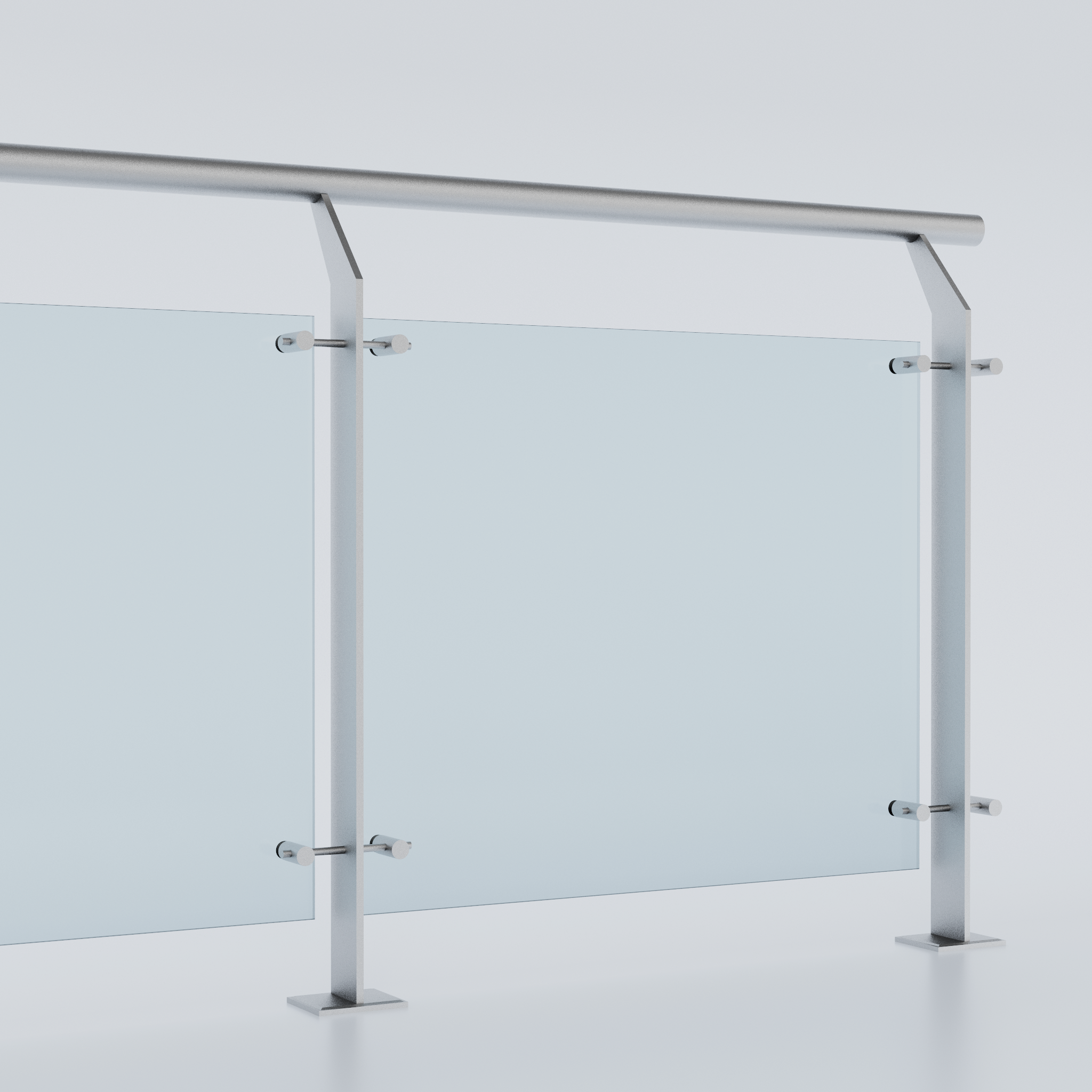
A railing is not a single part. It is a system of posts, clamps, handrails, anchors, and fasteners. Mismatched component tolerances can cause installation delays, rework, and hidden safety risks.
Before procurement, confirm:
- Hole positions and fitting standards are unified across batches
- Glass thickness range is clearly supported
- Anchor and base plate specifications match the substrate condition
3. Reduce On-Site Uncertainty with Standardized Modules
For large projects, standardized modular components can significantly reduce site labor time. Teams can pre-verify dimensions in factory production and avoid repeated cutting/drilling on site. This improves installation speed and consistency across multiple zones.
4. Verify with Performance Testing Data
Always request test evidence before final approval. Typical checks include:
- Load capacity test
- Salt spray / corrosion resistance test
- Impact test for glass railing applications
- Fatigue cycle test for high-traffic areas
5. Plan Lifecycle Cost, Not Just Purchase Cost
A lower initial price can become expensive if replacement or maintenance occurs early. For public infrastructure and coastal sites, the total lifecycle cost model usually favors higher-grade materials and stable system design.
Quick Selection Reference
| Project Type | Suggested Grade | Priority |
|---|---|---|
| Indoor residential | 201 / 304 | Cost efficiency |
| Outdoor commercial | 304 | Balance of cost and durability |
| Coastal infrastructure | 316 / 316L | Corrosion resistance and service life |
Conclusion
Choosing the right stainless steel railing system is a technical decision that directly affects safety, installation efficiency, and lifecycle cost. By matching material grade to environment, standardizing components, and validating with test data, project teams can deliver more reliable outcomes with fewer surprises during execution.