
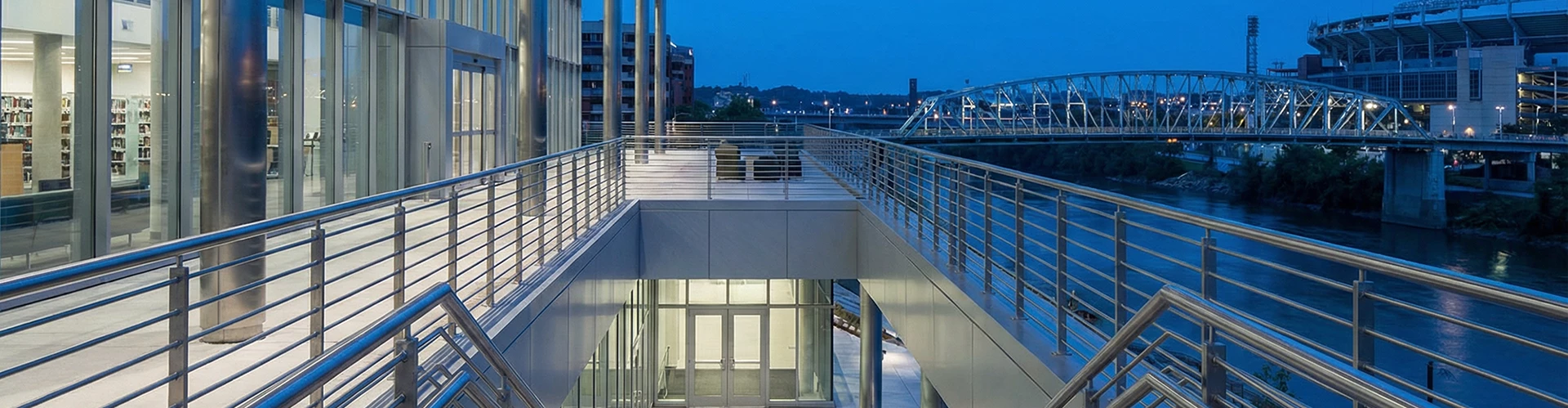
Traffic Facilities Railing Solutions: Safety, Durability & Efficiency for Urban Mobility
 BO NAN SHENG
 Apr 21,2026

Core Challenges of Railing Systems in Traffic Facilities
Traffic facilities face a unique set of challenges that distinguish them from residential, commercial, or industrial spaces. Railing systems here must adapt to dynamic usage scenarios, extreme environmental conditions, and strict safety requirements, all while supporting the smooth operation of urban traffic.
Key challenges include: frequent vehicle impacts (intentional or accidental), long-term exposure to rain, sunlight, road salt, and air pollution leading to corrosion, high foot traffic causing wear and tear, the need for clear traffic guidance, and compliance with municipal traffic safety codes. Additionally, railings in traffic facilities must be low-maintenance to minimize disruption to traffic flow and reduce operational costs for municipal authorities.
BNS Traffic Facilities Railing Solutions: Tailored for Urban Mobility
BNS leverages advanced materials, precision engineering, and modular design to deliver railing systems that meet the rigorous demands of traffic facilities. Our solutions prioritize safety, durability, traffic guidance, and environmental adaptability, while offering flexible customization to fit diverse traffic scenarios.
Safety-Centric Design: Protecting Pedestrians & Motorists
Safety is the top priority for traffic facility railings, as they serve as a critical barrier between pedestrians and vehicles, and between elevated areas (overpasses, footbridges) and traffic below. BNS railings are engineered to meet or exceed global traffic safety standards, with specialized features to mitigate risks in high-dynamic environments.
Reinforced impact resistance is a core feature: our railings use heavy-duty materials and reinforced connection hardware, including thickened profiles, larger cross-sections, and robust anchorage systems designed to distribute impact forces into structural slabs. This ensures the railing remains stable even when subjected to vehicle collisions or crowd pressure, preventing catastrophic failures that could lead to injuries. For elevated traffic facilities such as overpasses and footbridges, railings are designed with sufficient height and spacing to prevent falls, while anti-slip handrails provide additional safety for pedestrians in wet or icy conditions.
Additionally, we incorporate tamper-proof fasteners and protected handrail edges to prevent vandalism and reduce maintenance interventions, ensuring the railing’s safety performance is maintained over time.
Durable Materials: Withstanding Harsh Traffic Environments
Traffic facility railings are exposed to extreme environmental conditions—road salt, rain, UV radiation, and air pollution—and constant wear from foot traffic and vehicle contact. BNS uses high-performance materials and advanced surface treatments to ensure long-term durability and corrosion resistance.
Our primary material options include Grade 304 and 316 stainless steel, known for their excellent corrosion resistance, making them ideal for both indoor and outdoor traffic facilities. For cost-effective yet reliable solutions, we also offer engineered aluminum railings, which can be reinforced with thicker extrusions or welded reinforcement to handle heavy loads and foot traffic. All materials undergo strict quality control to ensure they meet the durability requirements of traffic facilities.
Advanced surface treatments further enhance durability: anti-corrosion coatings resist rust and degradation from road salt and moisture, while abrasion-resistant finishes preserve the railing’s appearance under heavy use. These treatments also make the railings easy to clean, reducing maintenance efforts for municipal teams.
Traffic Guidance & Aesthetic Integration
In traffic facilities, railings play a key role in guiding traffic flow and separating different user groups—pedestrians, cyclists, and motorists—redu